Connections Puzzle Tips: Identify Groups Faster & Smarter
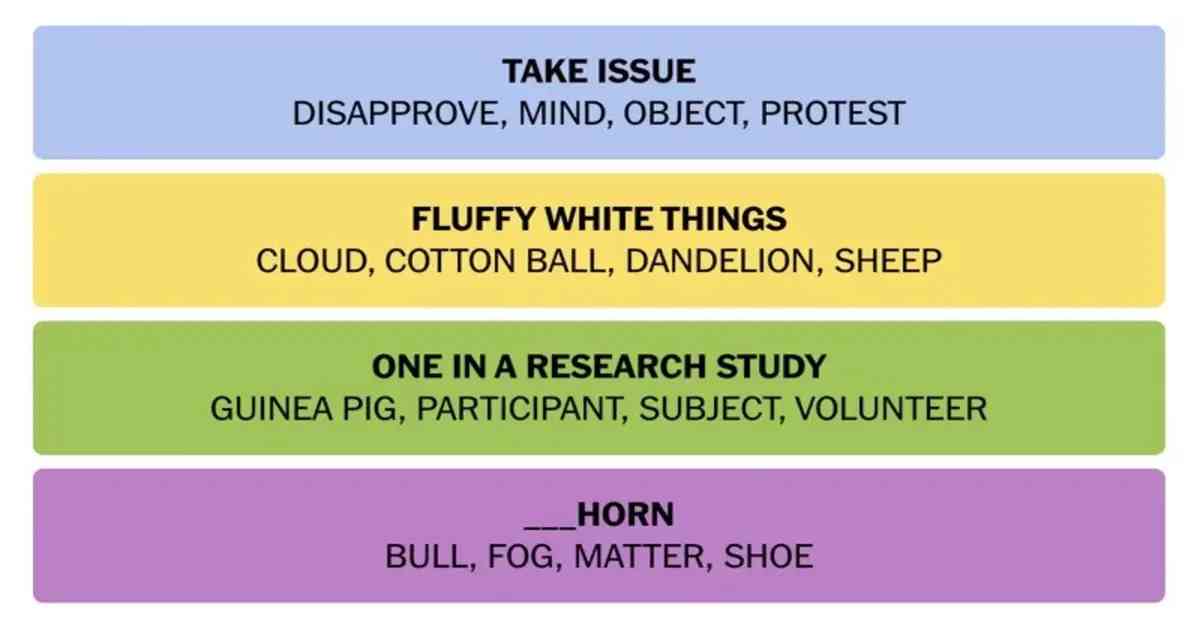
Connections puzzle can be quite deceiving at first, only 16 words on a grid, but actually coming up with the right groups can be very challenging. In fact, most players fail not because the puzzle is too difficult but because they don't use the right methods to quickly spot connections.
Usually, if you get stuck or don't have enough attempts, it isn't because of a lack of skill but rather because of wrong strategy. Here, you'll get to know some handy methods you can use to spot groups in a flash, make fewer errors, and generally get better at Connections.
Scan All Words Before Making a Move
It is a common pitfall for new players to just leap in and make guesses without any pondering. Instead, give yourself just a few seconds to really see what all 16 words have to offer. Briefly looking them over tells your mind to involuntarily find obvious links between them. Maybe you will discover certain types like colors, occupations, or idioms. Taking a glance at them first will give you the right frame of mind for quickly and cleverly forming groups.
Start with Obvious Categories
One of the most straightforward ways to quickly get groups is simply finding the easiest categories. Think about words that clearly fit together like fruits, pets or countries. Getting the easiest cluster out of the way first means there are fewer words left to deal with, and that it's simpler for you to find the trickier ones next. Doing this elimination one piece at a time is not only time-efficient but it also clears your head.
Look for Word Patterns and Themes
Often the whole concept of puzzle Connections depends on unveiled patterns. Among others, these might be prefixes, suffixes, rhyming words, or even words having the same meaning. For instance, they may be words ending with the same set of letters or belong to a certain category like films or slang. Learning how to spot these patterns is going to help you a lot when it comes to your working speed.
Beware of “Trap” Words
The presence of misleading words can be one of the most difficult aspects of the Connections puzzle. It could be that certain words seem like they belong to the same group but in reality they are different ones. Make sure to always check again before you confirm a group. If a connection is too straightforward to you, then you should pause to think of other meanings. That way you won't waste your tries on incorrect guesses.
Use the Process of Elimination
In the Connections, elimination is a very good tactic. As soon as you figure out one group, you can get those words out of your mind and concentrate on the rest. By having fewer words, it becomes a lot easier to see patterns. So, this strategy not only decreases the level of difficulty but also makes it more likely that you'll be able to finish the puzzle.
Think Beyond Literal Meanings
You will find that many of the words in Connections puzzles can have more than one meaning. For instance, a word may not go in a particular group if you think only about the ordinary meaning but it may be included if you consider some other or less obvious meaning.
In other words, it could be that the word is part of a phrase, a slang term or a cultural reference. Therefore if you want to solve difficult groups, you have to think beyond the basic meanings.
Practice Pattern Recognition Daily
Identifying the groups quickly relies, as any other skill, on the amount of the practice. The more puzzles you work with, the faster you are capable of spotting the connections. By solving the puzzles every day, your brain will be able to pick up the patterns and tricks, which are regularly employed in the game. Thus, in the long run, you will be able to recognize the groups without even thinking about it.
Stay Calm and Avoid Rushing
Fast is good, but rushing will only cause you to make mistakes. It is better to take a few seconds of the extra time to think and avoid random guessing. When you keep calm you are able to analyze words better and make decisions based on logic. A well thought out strategy is always a better option than a rushed one.
Learn from Each Puzzle
Every time you complete a puzzle, you learn another piece of the game. Regardless of whether you win or lose, it is good to check the correct groups. Knowing why some words have been grouped together will help you to spot them more easily next time. This will be your main source of knowledge.
Conclusion
Recognizing groups quickly in a Connections puzzle revolves around how well you can observe, use your logic skills, and how much you practice. Scanning words carefully, tackling easy categories first, and eliminating wrong options will help you a lot both in speed and correctness.
After some time with regular practice and suitable methods, what was complicated to you will become quite easy. As time is going on, not only will you get to figuring out puzzles quicker, but you will also get a lot more pleasure from the challenge.